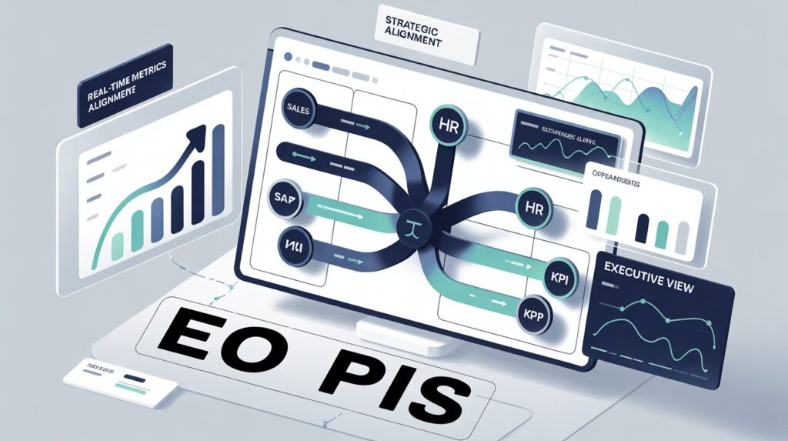
Leaders today face overwhelming data from separate systems—finance reports, sales spreadsheets, and marketing analytics. Despite mountains of information, insight remains elusive. Teams work toward different goals, creating strategic drift. Traditional KPIs track isolated tasks but miss organizational alignment. EO Pis emerged as the solution, offering executives a consolidated view of key operational metrics in real-time. Standing for Executive Operations Performance Indicator System, EO Pis bridges daily work with long-term strategy.
Thank you for reading this post, don't forget to subscribe!This framework transforms how organizations monitor performance, make decisions, and allocate resources. By filtering noise and focusing on outcome-centric indicators, businesses achieve clarity previously impossible with siloed departmental dashboards.
Understanding EO Pis: Beyond Traditional Performance Metrics
Most executives misunderstand what makes EO Pis different. It’s not another dashboard—it’s a governed measurement layer.
In finance, practitioners call it the End-of-Period Indicator System. Pre-close signals surface unreconciled balances, late journals, and forecast-to-actual gaps before the official close. Controllers resolve issues mid-period instead of scrambling at month-end.
Executive management interprets it as outcome-aligned measures helping leaders manage by exception. Rather than browsing hundreds of departmental KPIs, executives review compact indicators tied to retention, margin, uptime, and safety.
Digital experience contexts use Experience Optimization Performance Indicators, tracking burnout risk, engagement quality, and accessibility as human outcomes instead of purely financial metrics.
The contextual fluidity matters. What started as addressing practical shortcomings of static KPI dashboards evolved when teams needed earlier warnings than the month-end results provided.
Close cycles accelerated, real-time data became common, and shared definitions had to travel consistently across ERP, CRM, and BI tools. Practitioners coined flexible shorthand grouping pre-close signals, exception flags, and outcome-oriented indicators under a single umbrella.
Over time, it evolved into systems with roles, data lineage, reconciliation rules, and explicit thresholds. The underlying need to translate raw data into timely, trustworthy action stays universal, even when specific metrics differ across domains.
Why Modern Organizations Are Adopting EO Pis
Digital transformation forces faster decision-making. Monthly reports arrive too late when business moves in real-time.
The Digital Transformation Catalyst
Real-time analytics, automated workflows, and smart dashboards changed executive expectations. Leaders demand visibility into what’s happening now, not last month’s history.
Organizations using this framework report 30-50% faster close cycles. That speed advantage compounds—teams spend less time debating numbers, more time acting on insights.
Performance management becomes a continuous loop instead of a periodic checkpoint. Decisions arrive quicker when signals emerge earlier.
Alignment Crisis in Growing Companies
Growth creates silos. Marketing chases leads, sales pursues deals, and finance monitors costs—often working against each other accidentally.
This system creates a single source of truth. When departments see how activities affect headline outcomes, cohesion improves dramatically.
The shared dashboard connects every team’s work to the company’s main objectives. Strategic alignment tightens without creating a blame culture because clarity replaces ambiguity.
Leaders gain agility responding to market shifts, customer needs, and operational disruptions. Tools show current performance, not historical data.
Core Architecture: What Makes an EO Pis System Effective
Effective systems rest on four pillars, nothing extra.
Essential Components
The Centralized Dashboard acts as a command center. One high-level view displays critical metrics from all departments simultaneously.
Executives check organizational health in minutes. It’s one-stop visibility—no jumping between systems or reconciling conflicting reports.
Strategic KPIs Integration pulls existing data from finance, sales, HR, and operations. The framework doesn’t replace current metrics—it enhances them.
Connections show how small tasks impact the big picture. Daily activities link to strategic goals through clear metric relationships.
Automated Reporting generates updates using live data. Hours of manual work vanish. Every leader sees the same accurate information simultaneously.
Version control chaos disappears. Consistency ensures alignment across the executive team.
Predictive Analytics represents an advanced capability. Systems forecast using current data to predict future risks and spot new opportunities.
Organizations move from reacting to problems toward anticipating challenges. That shift changes strategic positioning fundamentally.
Data Source Requirements
Integration points matter more than data volume. ERP systems, CRM platforms, HRIS, and operations logs all feed the indicator framework.
Data quality forms the foundation. Without reconciled, reliable feeds, systems mislead instead of guiding.
Inconsistent definitions across systems create false signals. If CRM records revenue differently from ERP, dashboards misreport performance.
The governance layer requires metric definitions, ownership assignments, and audit trails. Someone must adjudicate when systems disagree and publish updates that everyone follows.
Real-time versus batch processing represents a strategic choice. Real-time pipelines allow continuous updates but demand infrastructure investment.
EO Pis vs. KPIs, Balanced Scorecard, and OKRs: A Strategic Comparison
Understanding when to use which framework separates effective executives from overwhelmed ones.
| Framework | Primary Focus | Data Scope | Audience | Update Frequency |
| Traditional KPIs | Task completion, departmental metrics | Isolated, single-system | Managers, team leads | Weekly/Monthly |
| EO Pis | Strategic alignment, pre-close readiness | Consolidated, cross-functional | C-suite executives | Real-time/Daily |
| Balanced Scorecard | Strategy translation, four perspectives | Curated strategic themes | Senior leadership | Quarterly |
| OKRs | Goal-setting, achievement tracking | Objective-aligned initiatives | All levels | Quarterly |
Traditional dashboards report lagging results, often sprawling across dozens of isolated metrics. This framework narrows focus to a few indicators that must be correct and timely for landing financial close or steering strategic outcomes.
It’s curated, thresholded, and action-linked by design. Financial close procedures stay exhaustive, document-heavy. The system doesn’t replace them—it prepares, accelerates by surfacing issues earlier.
Think runway lights lining up for landing, while close represents landing itself. Balanced Scorecard emphasizes strategy translation. This framework instruments the execution layer with fewer, clearer indicators tied to the same intent.
Exception handling, governance, keep data credible, decisions fast. They’re complementary, not competitive. Use different tools for different purposes—don’t force a single framework for everything.
Proven Benefits: What Executives Gain from EO Pis Implementation
Real organizations report specific, measurable gains from adoption.
- Faster Close Cycles: Up to 30-50% reduction documented. Some manufacturers cut from 9 to 5 business days.
- Strategic Alignment: Departments work toward the same goals through shared visibility into how activities affect outcomes.
- Resource Optimization: Executives identify underutilized, overutilized resources—budget allocation, manpower, time- and optimize based on actual data.
- Transparency and Accountability: Performance becomes accessible to relevant stakeholders. Clear visibility fosters ownership without a blame culture.
- Cost Reduction: Identifying inefficiencies and optimizing operations helps reduce costs through streamlining workflows and minimizing downtime.
- Predictive Capability: Advanced algorithms analyze historical data, current trends, and forecast future performance, enabling proactive strategy adjustments.
These aren’t theoretical promises. SaaS companies lift quarter predictability by intervening days earlier through automated alertsino Slack. Revenue ops acts before end-of-month chaos hits.
Health systems raise patient satisfaction while reducing reactive compliance work. Care teams act on exceptions within the EMR workflow using time-to-triage and readmission risk flags.
When stakeholders trust indicators, decisions speed up. Close shortens without sacrificing rigor. Teams debate less, act more—turning performance management into a continuous loop.
Building Your EO Pis: A Practical Selection Framework
Most implementations fail at metric selection. Too many signals drown priorities.
Step 1: Define Strategic Outcomes First
Start with questions, not data collection. What outcomes matter most? Growth, customer retention, margin improvement, operational uptime?
Draft charter naming owners, consumers, and decision rights. List candidate indicators. State how success gets measured—close days reduced, forecast error cut, churn lowered.
Reverse-engineer from goals to metrics. Don’t measure what’s easy—measure what matters strategically.
Step 2: Apply the RAB Filter
Every metric passes three tests or gets eliminated.
Relevant means aligning with strategic or closing objectives. If metrics don’t tie to stated goals, cut them immediately.
Actionable means prompting specific actions. Metrics informing without driving decisions waste attention and create noise.
Balanced means mixing leading and lagging, outcome and process indicators. Pure lagging metrics report history without steering future performance.
Examples passing RAB: revenue variance, customer churn, backlog clearance, exception count, operating margin.
Cap core indicators to 5-12 maximum. Supporting metrics live in drill-downs, not the main dashboard. Pair each with owner, threshold, next action—attention maps to accountability this way.